ZIMBABWE’S ZIG CURRENCY IS A TICKING TIME BOMB
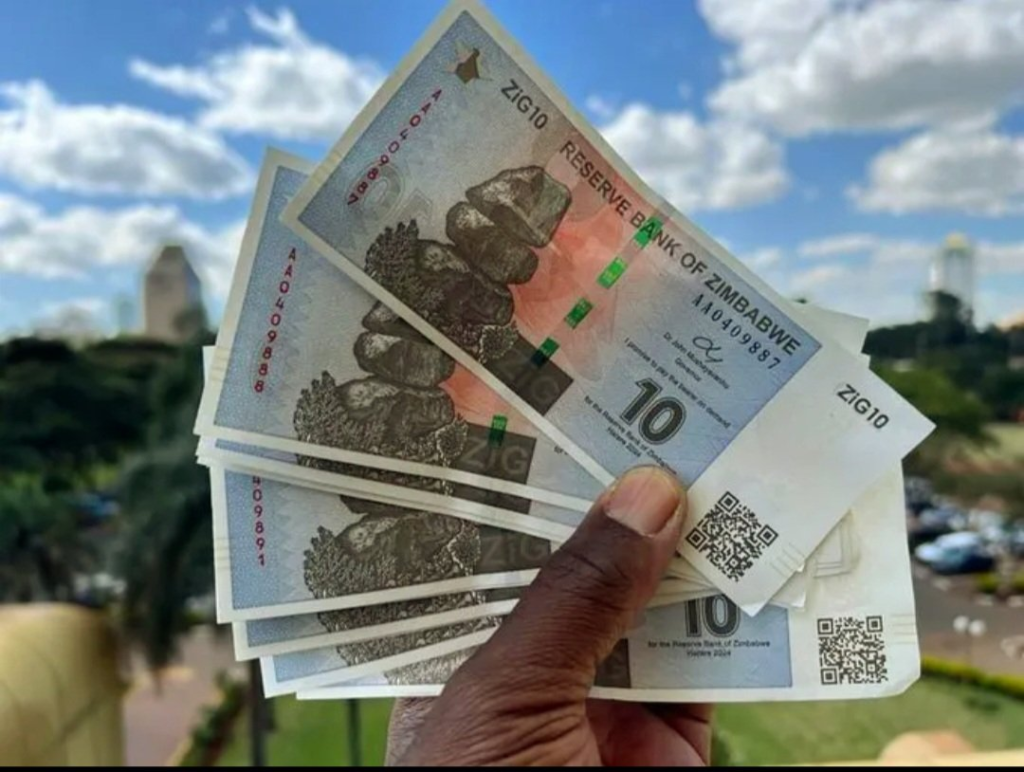
Zimbabwe’s latest currency experiment, the ZiG, is quickly turning into a national disaster. Touted as a gold-backed solution to bring economic stability, the ZiG has only added fuel to the fire. Since its introduction, it has wreaked havoc across the economy, pushing businesses to the brink and intensifying the suffering of ordinary citizens. What was meant to restore confidence has instead exposed deeper rot in Zimbabwe’s financial and political systems.
Retailers across the country are now in crisis mode, warning that they may be forced to shut their doors due to the severe distortions caused by the ZiG. The formal economy is being crushed under the weight of unrealistic policies. The official exchange rate pegs the ZiG at 13.8 to the US dollar, but the parallel market tells a different story — trading at around 30 to 1. This massive gap is not just an inconvenience; it’s a death sentence for formal businesses forced to use the official rate while competing with informal traders who operate freely using parallel market pricing.
The ZiG has already lost almost 50% of its value since launch. Inflation, officially reported at 3.7%, is believed by independent economists to be over 800% — placing Zimbabwe among the most inflation-ridden countries in the world. The Reserve Bank of Zimbabwe claims it won’t print more money, but evidence suggests otherwise. Its attempt to manipulate money supply has created a confusing environment where notes are scarce, prices are volatile, and economic planning is nearly impossible.
President Mnangagwa, while stating his ambition to de-dollarize the economy, has extended the use of foreign currency until 2030. This contradiction alone reflects the lack of a coherent monetary policy. Despite official claims of stability, Zimbabweans know better. They’ve seen this story before — from bearer cheques to bond notes to RTGS — and none of them ended well. The ZiG is no different, and trust is eroding fast.
The Retailers Association of Zimbabwe, representing key players like OK Zimbabwe, PicknPay, and SPAR, has raised the alarm. Formal retailers are bleeding because they must abide by official exchange rates, leaving them with overpriced products that consumers avoid. If this continues, the formal retail sector could collapse, leaving the informal market as the only option — an economic nightmare for any government serious about tax revenue, regulation, and growth.
Underlying all of this is a broken system of governance. Economic problems cannot be fixed by simply changing currencies. Structural reforms are needed — reforms that tackle corruption, improve transparency, and ensure sound political leadership. The Reserve Bank’s failed micromanagement, which has seen interest rates and inflation spiral unpredictably, is just a symptom of a deeper disease. Zimbabwe’s problem is not just economic — it is fundamentally political.
Adding to this crisis is Zimbabwe’s isolation from the international financial community. The government is unable to access affordable external funding and is relying instead on private entities for expensive loans. This unsustainable borrowing strategy is only making matters worse. Any hope for debt resolution or financial rescue hinges on re-engagement with key international players, particularly the United States. But the US has pulled back, leaving Zimbabwe in the cold — a direct result of the government’s refusal to reform and respect human rights.
The ZiG is failing because it was built on lies, not trust. It was sold as a panacea when the real disease is poor leadership, corruption, and policy inconsistency. Until Zimbabwe confronts these issues head-on, no currency — gold-backed or not — will ever succeed. Businesses are collapsing, citizens are losing confidence, and the economy is spiraling. This is not just a financial crisis; it is a political one. And it’s time for Zimbabweans to demand better — before the ticking time bomb of the ZiG explodes completely.


