ZIMBABWE’S GOLD-BACKED CURRENCY IS COLLAPSING — AND NO ONE CAN EXPLAIN WHY
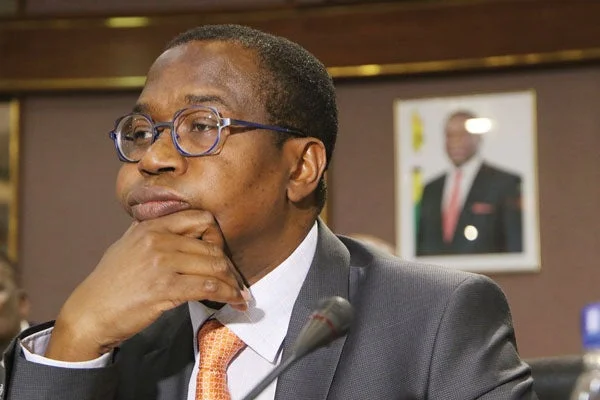
Finance Minister Mthuli Ncube is facing growing pressure from Zimbabweans who are demanding answers about the country’s troubled currency, the Zimbabwe Gold (ZiG). Touted as a gold-backed currency that would restore economic stability, the ZiG is instead falling fast in value—so fast that it is now the worst-performing currency in the world. This sharp decline is baffling to many, especially given that gold itself has been soaring in value throughout 2024.
Since January, gold has surged by over 28%, rising by 590.16 USD per troy ounce and reaching an all-time high of 2685.49 USD in September. For ordinary citizens, the math seems simple: if gold is going up, and ZiG is backed by gold, then ZiG should also rise or at least remain stable. But instead, the opposite is happening. The currency that was supposed to inspire confidence is now a symbol of frustration and confusion.
People have turned to Mthuli Ncube for clarity, but instead of providing solid explanations, he has delivered vague and complex statements. His public responses, often laced with technical jargon and poor Shona language skills, have only deepened the public’s confusion. In a country where most people operate in the informal economy and rely on clear communication, this failure to explain the basics has created more anger than assurance.
The key question on everyone’s mind is simple: how can a gold-backed currency be collapsing when gold is booming? It’s not just a question for economists—it’s a question for every market vendor, commuter, teacher, nurse, and parent trying to survive in an economy where basic goods are priced in a currency that loses value by the week. Zimbabweans expected that with gold doing well globally, their local currency would strengthen. Instead, they are watching prices rise while their purchasing power vanishes.
Ncube’s lack of a clear answer has led many to suspect deeper problems. Some believe the gold reserves supposedly backing the ZiG might not be as solid as claimed. Others think the currency may not be truly backed at all, or that the government’s monetary management is too weak to maintain the peg between gold and ZiG. Whatever the case, the people are not buying the official story—because there really isn’t one.
As the ZiG continues its freefall, daily life becomes harder. The price of bread, transport, school fees, and medicine increases in real time. People are being forced to hold US dollars for survival, even as the government insists on pushing a failing local currency. Those paid in ZiG are suffering the most, watching their incomes shrink against the rising tide of inflation and economic uncertainty.
The government had a rare opportunity. With global gold prices rising, Zimbabwe could have benefited if the ZiG had genuinely mirrored that value. But instead of seizing the moment, authorities have mismanaged yet another economic lifeline. Whether out of incompetence or dishonesty, they have failed to uphold the trust of the people. And with each passing day, that trust erodes further.
No matter how many technical terms are thrown around or how often officials dodge accountability, the truth remains: Zimbabweans are being shortchanged. They were promised a currency backed by gold, but they are left with nothing more than paper that buys less and less each day. The silence from those in power is deafening—and dangerous.
Until Ncube and the government offer real answers and real solutions, the people of Zimbabwe will continue to suffer under a broken system. The ZiG is collapsing, and no one in charge seems able—or willing—to explain why.


