WHEN JUSTICE TURNS INTO PERSECUTION: THE OUTRAGEOUS ARREST OF NAMATAI KWEKWEZA
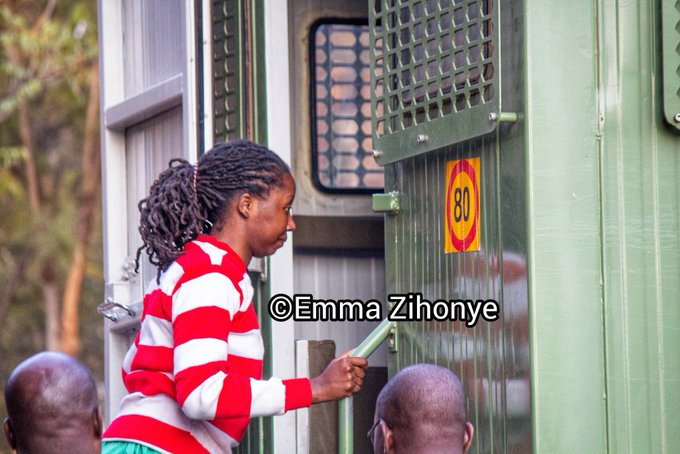
In a world where justice is supposed to defend the innocent and punish the guilty, Zimbabwe has become a glaring example of how that principle can be turned on its head. The arrest of human rights activist Namatai Kwekweza on 1 August at Robert Gabriel Mugabe International Airport has sent shockwaves through the nation and beyond. She was pulled off a flight headed to Victoria Falls, accused of crimes that, as evidence shows, she could not possibly have committed. This incident is not an isolated mistake but part of a broader pattern of state persecution, intimidation, and the silencing of dissent under ZANU PF rule.
Kwekweza is no stranger to the wrath of Zimbabwe’s repressive state machinery. She has long been an outspoken advocate for democracy and human rights, exposing corruption, authoritarianism, and state-sponsored violence. Her fearless activism earned her the 2023 Kofi Annan NextGen Democracy Prize, recognition of her dedication to the struggle for a freer Zimbabwe. Yet, this same commitment has made her a target. When the government feels threatened by voices that demand justice, it responds not with dialogue, but with handcuffs and batons.
Kwekweza was arrested alongside three other pro-democracy activists — Robson Chere, Samuel Gwenzi, and Vusumuzi Moyo. The state alleges they were involved in protests demanding the release of opposition leader Jameson Timba and 78 others, who had been arrested for holding a Youth Day commemoration in June. According to authorities, the demonstration caused “public disorder” near a court. However, this supposed crime is nothing more than a peaceful act of solidarity — an expression of democratic rights enshrined in Zimbabwe’s own constitution. The arrests are a calculated move to instill fear ahead of the Southern African Development Community summit, where President Emmerson Mnangagwa is desperate to present an image of control and stability.
But the state’s case against Kwekweza collapses under the weight of basic facts. Travel records show that she was not even in Zimbabwe at the time of the alleged protest. She left Harare on 23 June 2024 on an Airlink flight to South Africa and only returned on 28 June aboard a Fastjet flight. The protests in question took place on 27 June — meaning she was in another country entirely. The idea that she could have participated is absurd, an insult to both logic and law. Yet, in Zimbabwe’s courts, reason often takes a back seat to political convenience.
The cruelty does not stop there. One of her co-accused, Robson Chere, was reportedly tortured following his arrest, and reports suggest he may have suffered kidney damage from the abuse. This is a chilling reminder of how the state uses violence as a tool to crush opposition and manufacture confessions. It is the same dark tactic used against countless activists before him — a stain on a justice system that has been reduced to an instrument of fear.
For Kwekweza, the consequences of this injustice are profound. She has lost her freedom, endured humiliation, and faces ongoing psychological trauma. Her reputation, once a symbol of youthful courage and democratic hope, is being dragged through the mud by a regime terrified of accountability. She is being punished not for breaking the law, but for daring to speak truth to power. In Zimbabwe today, innocence offers no protection — and guilt is whatever the state says it is.
The presumption of innocence, a cornerstone of justice, has been turned upside down. Under ZANU PF’s rule, citizens are treated as guilty until they can prove otherwise. The case of Job Sikhala stands as another painful testament to this grim reality. Kwekweza’s ordeal exposes not just a broken justice system but a government that fears its own people. Her persecution is a stark reminder that the fight for human rights in Zimbabwe is far from over — and that those who dare to stand up for justice are forced to do so at great personal cost.


