WE CELEBRATED TOO SOON: THE BETRAYAL OF NOVEMBER 2017
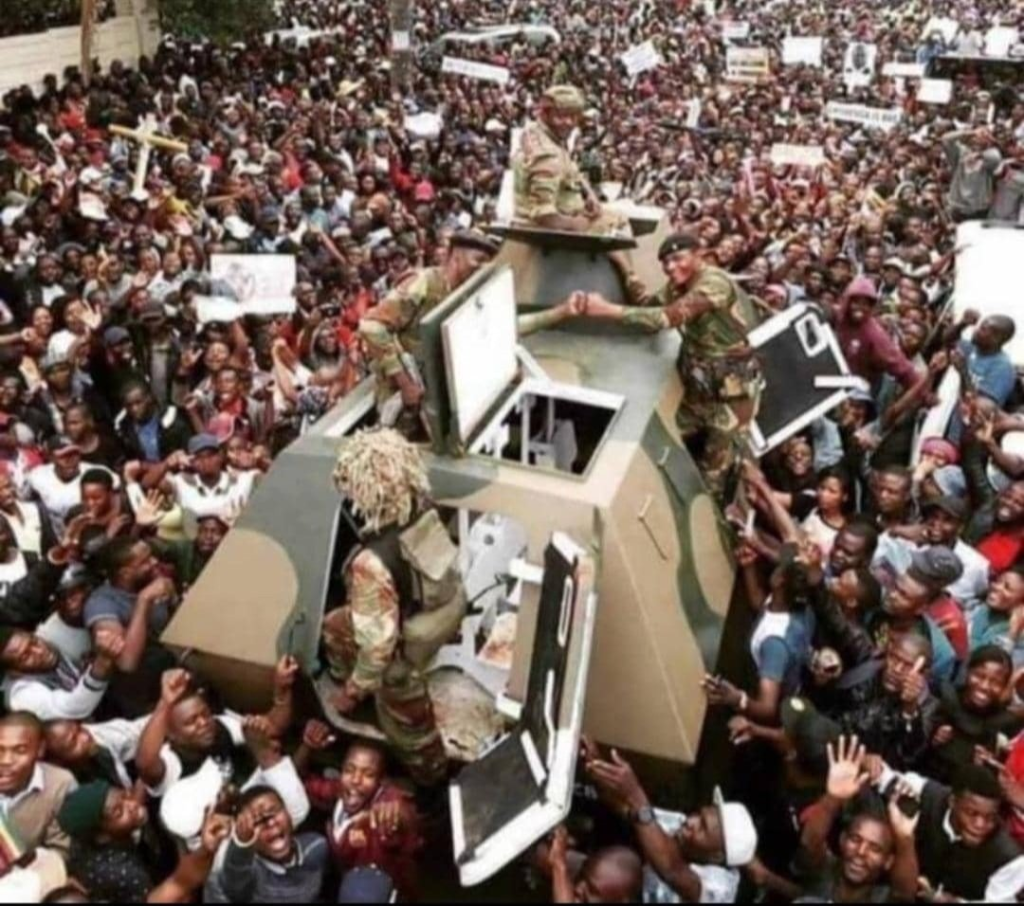
On this day in 2017, Zimbabwe was filled with a rare kind of hope. For the first time in decades, people from all walks of life took to the streets not out of fear or protest, but in celebration. After 37 years under Robert Mugabe’s iron rule, it finally seemed like the country was on the brink of something new. The tanks on the streets and the chants in the air felt like the beginning of freedom. It was a moment that united a broken nation. But what followed proved that not all change is progress.
When the army seized control on November 14, they were quick to claim it wasn’t a coup. They said it was a necessary intervention to restore order. By then, Mugabe, aged 93, was already a puppet with no strings left to pull. ZANU PF was sharpening its political knives, ready to impeach him if he didn’t resign. The air buzzed with hope and illusion. For a brief moment, Zimbabweans believed the nightmare was ending.
But in our celebration, we forgot to look deeper. We were so desperate to get rid of Mugabe that we didn’t stop to ask who was stepping into his shoes. We accepted Emmerson Mnangagwa, known as ED, as the face of the “new Zimbabwe.” We mistook new slogans and soft-spoken lies for transformation. Mnangagwa promised reform, prosperity, and a break from the past. We believed him because we wanted to. But hope, unchecked, can be dangerous.
Mnangagwa wasn’t a stranger to the regime’s rot. He was its product. For decades, he had been Mugabe’s loyal enforcer — quiet, brutal, and complicit. He was part of the same machinery that crushed dissent, looted public resources, and destroyed dreams. We thought we were cleaning house, but all we did was move furniture.
Since Mnangagwa took power, the promises have faded, and reality has returned — harsher than before. The economy is still broken. Inflation continues to devastate households. Basic services like healthcare and education have collapsed. Corruption remains rampant, only now it’s dressed in newer suits. Those who speak out are arrested, abducted, or silenced. Journalists, activists, and opposition leaders live in fear. The so-called “Second Republic” has become a cruel joke, a reminder that dictatorship can wear different masks but still carry the same intent.
What happened in 2017 was not a revolution. It was a handover between elites — a palace coup sold to the people as salvation. We traded one dictator for another and called it democracy. That is the bitter truth we must confront.
This day should not only remind us of the excitement we felt but also the mistake we made. We were too quick to celebrate, too willing to believe. We didn’t ask the hard questions. We didn’t demand more than promises. We didn’t challenge the system; we only changed the face.
But all is not lost. The lesson of November 2017 is still valuable. It shows us that real change cannot come from within a corrupt system. It must be built outside of it, by the people. It shows us that we must fight for systems that serve, not just slogans that soothe. And it reminds us that power only shifts when citizens demand more than survival — when they demand justice, dignity, and accountability.
As we mark this day, let us not be fooled again. Let us remember that freedom is not given — it is won. And the struggle for Zimbabwe’s freedom is still unfinished.


