MNANGAGWA TRAPPED IN CHIVAYO SCANDAL: DAMNED IF HE DOES, DAMNED IF HE DOESN’T
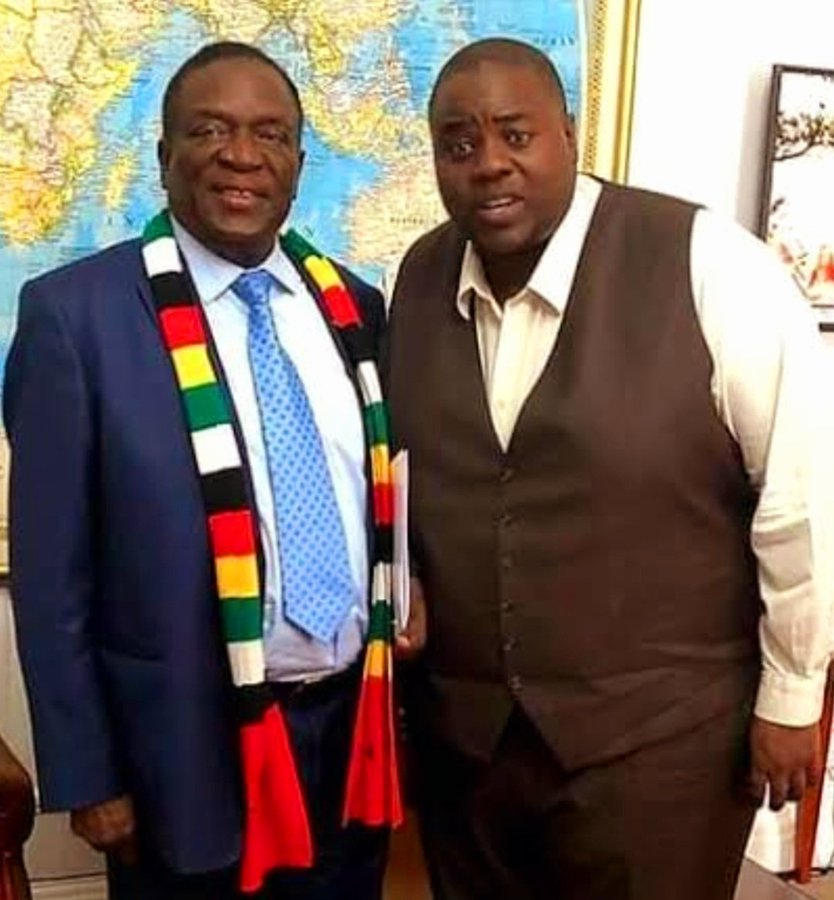
In a storm of political intrigue and brewing scandal, President Emmerson Mnangagwa is caught in what can only be described as a political nightmare. At the center of this crisis is Wicknell Chivayo, a controversial ex-convict tycoon now implicated in a murky Zimbabwe Electoral Commission (Zec) tender deal. But this is no ordinary corruption story. It has spiraled into a national reckoning—one that threatens to shake the very foundations of Zimbabwe’s ruling elite.
Chivayo, never one to shy from attention, has publicly declared that he holds sway over the President himself. This staggering claim has left the nation both shocked and transfixed. If true, it suggests Mnangagwa is not the man in control, but rather a puppet whose strings are being pulled by someone with a criminal past and questionable alliances. The gravity of such a claim is not lost on anyone. For the President, the situation is stark: arrest Chivayo and risk exposing a network of rot that may reach his own office, or let him roam free and confirm every rumor that he is indeed compromised.
The stakes could not be higher. Choosing to prosecute Chivayo could result in the release of damning evidence that implicates not just the businessman, but key figures in Mnangagwa’s inner circle. These include Chief Secretary to Cabinet Martin Rushwaya, Zec Chairperson Priscilla Chigumba, and Central Intelligence Organisation Director-General Isaac Moyo—all of whom are either closely tied to the President or directly related to him. Their alleged involvement drags the scandal from a mere legal concern to a full-blown political earthquake.
And yet, doing nothing may be just as destructive. If Mnangagwa hesitates or refuses to act against Chivayo, it risks confirming the tycoon’s boastful narrative that he holds the President in his pocket. Such inaction would cast Mnangagwa as a weak leader, beholden to shady dealers rather than leading with integrity. His image as a reformist, already on shaky ground, would be shattered beyond repair.
The timing could not be worse. Mnangagwa’s administration is already under intense scrutiny from citizens, civil society, and the international community. After years of promising a clean break from the Mugabe-era legacy of corruption and authoritarianism, this scandal threatens to expose those promises as empty slogans. His efforts to revive the collapsing economy and attract foreign investment rely heavily on the image of a government that is stable, transparent, and credible. Chivayo’s allegations tear right through that illusion.
Meanwhile, Chivayo himself appears fearless—almost gleeful in his provocation. His attitude is one of a man who knows he cannot lose. Whether through silence or exposure, he seems to believe he has created a scenario in which the state’s next move will serve only to elevate his position or vindicate his threats. That kind of confidence, in a country where dissent is often silenced, is alarming in itself.
This unfolding drama is more than a personal dilemma for Mnangagwa. It is a test of Zimbabwe’s governance, its anti-corruption institutions, and its future. Can the system hold one of its own accountable? Or will the old script of impunity, silence, and denial continue to play out?
For the people of Zimbabwe, weary of lies and looting, this is yet another bitter reminder of how power is wielded not for the nation, but for personal gain. The Chivayo saga is not just about one man’s audacity—it is a mirror reflecting the toxic state of politics in Zimbabwe. And in that mirror, Mnangagwa may be seeing the limits of his power.


