MNANGAGWA EXTENDS SIBANDA’S TERM TO FORTIFY POWER AND MUZZLE CHIWENGA
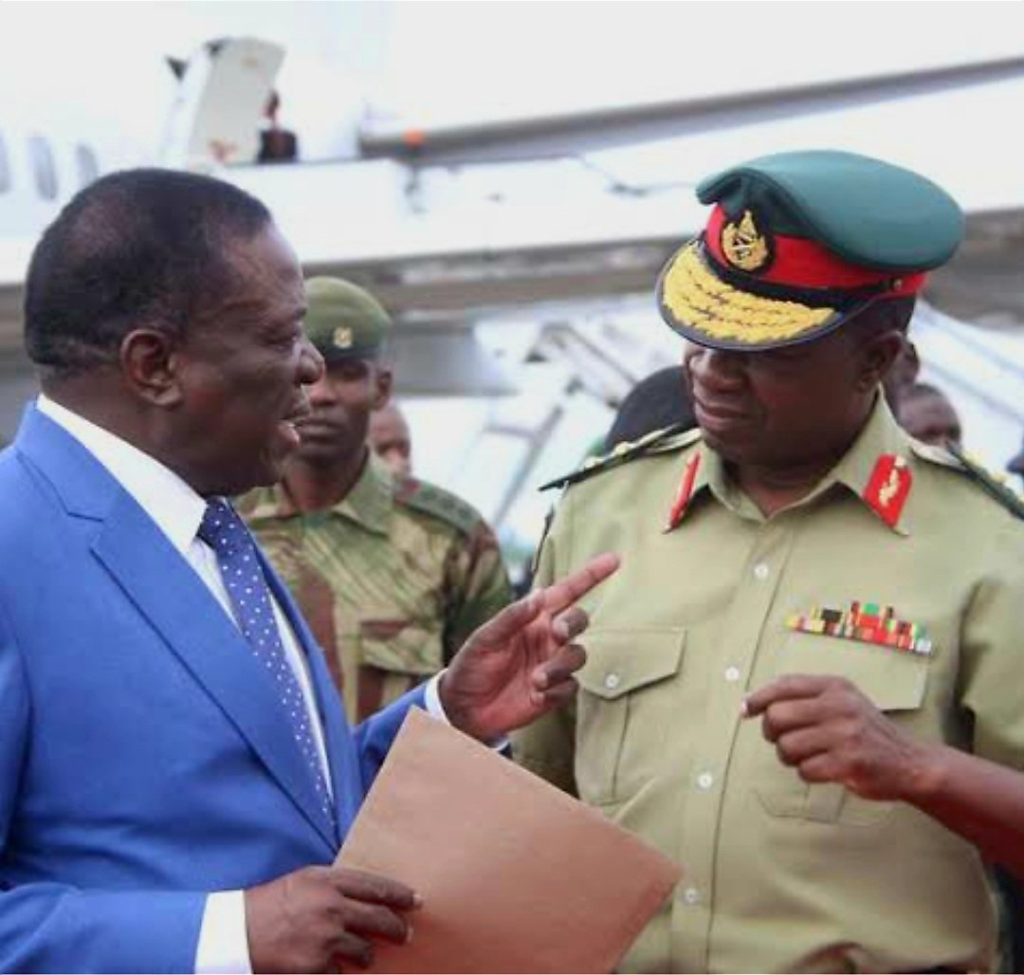
President Emmerson Mnangagwa has moved one more chess piece to secure his throne, extending General Philip Valerio Sibanda’s term as Commander of the Zimbabwe Defence Forces to 23 November 2025. The announcement, signed by Chief Secretary to the President and Cabinet Martin Rushwaya and wrapped in the legalese of “General Notice 15 of 2025” under the Defence Act, is more than bureaucracy. It is a message. Mnangagwa is battening down the hatches against storms from within his own house, especially from Vice-President Constantino Chiwenga, and against the ever-present spectre of a barracks-led correction to his rule.
Since the November 2017 coup, Mnangagwa’s political survival has leaned on Sibanda’s steady hand. When a coup scare flared in January 2019 while Mnangagwa toured Russia and Eastern Europe, it was Sibanda who acted as the shock absorber, keeping the edifice upright until the President returned. Without that intervention, the regime’s contradictions might have snapped into open rupture. Today, the same logic applies: keep the commander close, keep the barracks quiet, and keep Chiwenga contained.
This extension is not about national security; it is about regime security. Chiwenga remains Mnangagwa’s most credible rival, with deep roots in the security establishment and loyalists across the ruling party. Every month that Sibanda stays in command blunts Chiwenga’s leverage, turning the chain of command into a political moat around State House. Mnangagwa reads the terrain clearly: lose the military, lose everything. So he hugs it tighter.
There is also a calendar game at play. The Constitution says Mnangagwa’s second term ends in 2028, but his ambition stretches to 2030 and beyond in practice. Extending Sibanda’s term buys time and insurance while he maneuvers—testing legal edges, massaging party rules, and normalizing permanent exception under the cover of “stability.” It signals to jittery elites that the commander who has kept the lid on the pot will remain on the stove a little longer.
Yet this is the politics of sandbags, not strength. If Mnangagwa were confident, he would not need to engineer tenure extensions to pacify the barracks. By tying his fate to one general, he admits how brittle his coalition has become. It may quiet immediate rumblings, but it also concentrates risk. Should Sibanda’s loyalty waver or circumstances change, the same firewall turns into a fuse.
For citizens, the implications are stark. Instead of reforming the security sector and widening democratic space, State House is deepening military dependence. The result is a perpetual state of siege politics: activists harassed, elections managed, and the economy sacrificed to elite survival. Power contests inside ZANU PF become national crises because the state has been redesigned around one man’s anxieties.
Make no mistake: extending Sibanda’s term is a battle cry disguised as a memo. It dares Chiwenga to blink, dares rivals to test the walls, and dares the public to accept militarised normalcy as destiny. But history is unkind to leaders who confuse control with consent. The nearer we draw to the 2028 constitutional limit, the hotter the contest will burn, and the more desperate the improvisations to stretch it.
Mnangagwa’s strategy is painfully transparent: cling to loyalists, punish dissent, and outsource legitimacy to the uniform. Zimbabweans know this script. We have lived its costs. Our task is to keep naming the power games for what they are and keep organizing for a republic where commanders serve the Constitution, not one man’s timetable.
The extension may steady the palace briefly, but it cannot fix legitimacy. Only accountable governance can. Until then, every “notice” from the Gazette is a flare lighting the regime’s fear, not the nation’s future.


People love to criticise every decision without seeing the bigger picture. Extending General Sibanda’s term is about experience and discipline. The opposition would rather see the army divided and the country burning. This piece is biased and anti-government to the core.
What makes this article brilliant is how it reads through the lines of the so-called ‘General Notice.’ It’s true , every memo from State House carries the scent of fear. Extending Sibanda’s term is just another way to buy time, not stability. YOU captured Zimbabwe’s tragic cycle of politics through the barrel of a gun perfectly. This is not just commentary, it’s truth written with precision and courage.
Typical of anti-Zimbabwe so-called always twisting national progress into fearmongering. The army is loyal to the Constitution and the Commander-in-Chief. Extending Sibanda’s term is about professionalism, not politics. Some people just can’t accept that Zimbabwe is finally stable.
This article is nothing but opposition propaganda dressed as analysis. The President is ensuring stability and continuity in the defence forces. Anyone who lived through the 2008 chaos knows we can’t afford instability again. The writer clearly doesn’t understand security matters.