COLTART STANDS FIRM AS OTHERS FALL: A BEACON IN ZIMBABWE’S DEMOCRATIC STORM
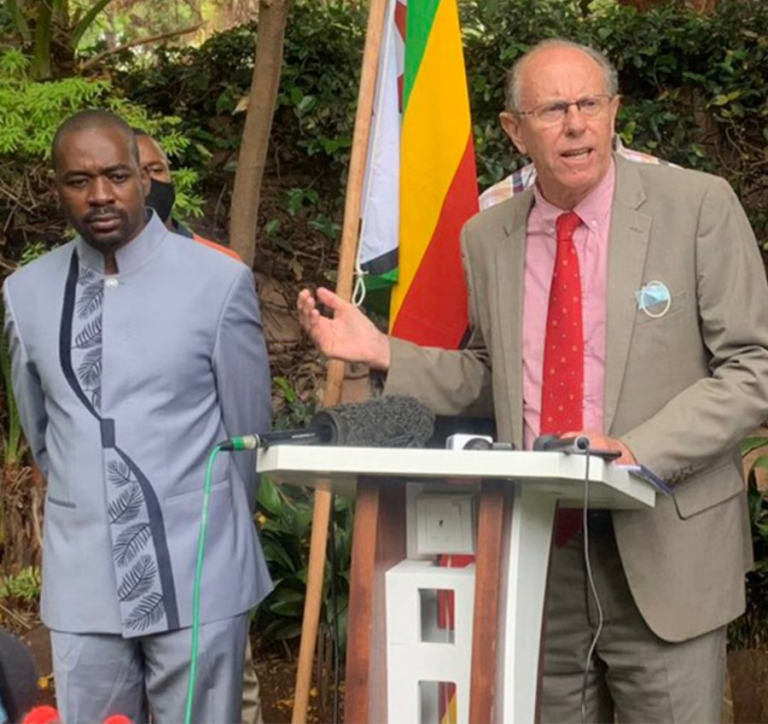
In a time when resignation has become the loudest political statement, David Coltart, the Mayor of Bulawayo, has chosen to speak through steadfastness. While others in the opposition Citizens Coalition for Change (CCC) have bowed out—most notably Nelson Chamisa, the party’s former president who stepped down on January 25—Coltart remains. His choice is not one of stubbornness, but of service, reflection, and deep conviction.
Coltart’s decision to stay on as mayor of Zimbabwe’s second-largest city was not made in isolation. He turned to the people—the very citizens he serves—for guidance. Using platforms like WhatsApp and X (formerly Twitter), he engaged directly with the public. The response was overwhelming: Bulawayo wanted him to stay. They saw in him a rare kind of leadership—accountable, grounded, and consistent. In a nation where trust in leadership has been eroded by years of corruption and incompetence, Coltart represents something different.
This decision was also shaped by voices within Zimbabwe’s long struggle for democracy. Senior democracy activists, some with over sixty years of experience in fighting authoritarianism, urged him to remain. They understand, perhaps more than most, how fragile and critical every democratic space is in today’s Zimbabwe. Coltart’s continued presence in office is not just about Bulawayo—it is about resisting the erosion of civic institutions and protecting whatever is left of democratic practice.
Bulawayo itself is in crisis. The city is battling a severe water shortage and decades of neglect. Resigning now, Coltart reasoned, would be a betrayal of the work already in motion to address these urgent issues. It would be a disservice to a city already let down too many times. In one of his final conversations with Nelson Chamisa before his resignation, Chamisa reportedly encouraged Coltart to keep going. That conversation served as a powerful reinforcement of Coltart’s decision.
More than a political move, Coltart’s stance is a moral one. Drawing on his Christian faith and the examples of historical figures who resisted authoritarian regimes, he is determined to be a source of light in a country drowning in darkness. His leadership is not motivated by power or money. In fact, he earns a mere US$25 a month in his role—an amount so small it serves as a symbol of his selflessness rather than a reward.
Some have accused Coltart of betrayal for staying on when others have left. Others question whether his decision serves his own interests. But such critiques ignore the substance of his service. Coltart has made it clear: he is staying not for himself, but for Bulawayo. For democracy. For the future of a country that has been systematically stripped of hope. His actions stand in sharp contrast to the political opportunism that defines much of Zimbabwe’s current political class.
In a Parliament whose authority has been gutted, in a country where opposition voices are silenced or recalled with impunity, Coltart understands the value of simply being there. Of occupying space. Of not yielding. He knows that once these spaces are vacated, they are rarely reclaimed. His presence, therefore, is resistance. It is a protest. It is a declaration that not every leader will abandon the people when the winds shift.
Coltart’s continued leadership is a gift to Bulawayo and a challenge to every Zimbabwean: to choose purpose over politics, people over position, and service over self-interest. In a land starved of principled leadership, David Coltart’s decision is more than just a personal choice—it is a statement of intent. One that echoes the cries of millions still hoping for a better Zimbabwe.


